Iran positioning itself as strategic hub on China-Europe corridor
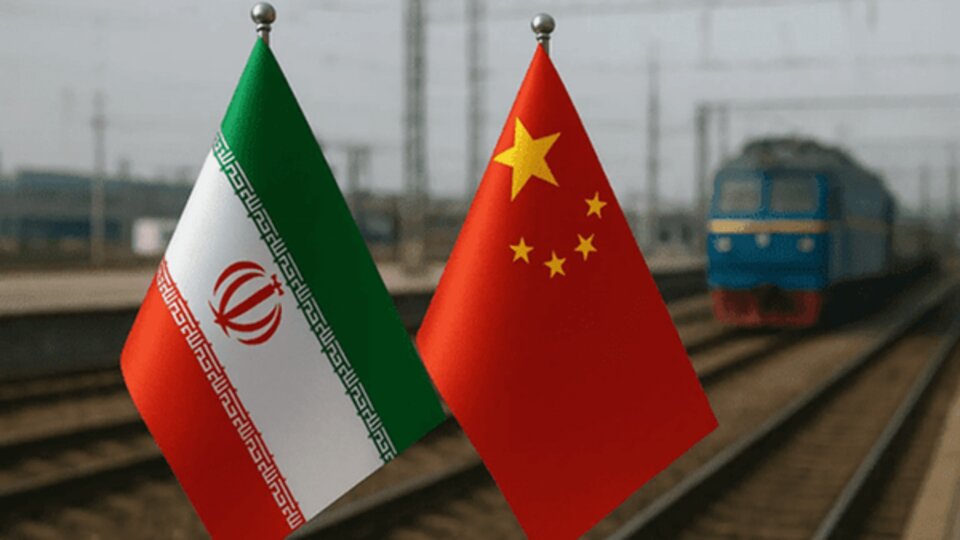
TEHRAN- The head of the Islamic Republic of Iran Railways (known as RAI) announced that so far 60 trains from China destined for Iran and the European Union have entered our country.
Making the remarks on Monday, Jabbar-Ali Zakeri pointed to the increase in the number of the Chinese trains passing through Iran, and emphasized the need to reduce transportation costs between Iran and China in order to boost exports.
A strategic economic imperative
The emphasis on cost reduction comes at a pivotal moment for Iran's economic strategy. As global supply chains continue to diversify away from traditional hubs, Iran's geographical position as a natural bridge between East and West is more valuable than ever. The Southern Corridor, part of China's expansive Belt and Road Initiative (BRI), represents a critical alternative to northern routes, offering a path through Central Asia that avoids geopolitical flashpoints further north. For Iran, maximizing traffic on this corridor is not merely a logistical goal but a strategic economic imperative, promising job creation, infrastructure development, and enhanced regional influence. Zakeri's call for lower fees is directly tied to making this route the most competitive and attractive option for global shippers, thereby transforming Iran from a transit point into a central logistics and value-add hub.
Back in late July 2025, during a meeting with Zakeri, the general manager of China State Railway Group Company, known as China Railway (CR), considered Iran an important partner in the "One Belt, One Road" initiative and emphasized the need for coordination to stabilize prices and facilitate customs processes in the Southern Corridor.
In the meeting, emphasis was placed on increasing the number of container trains between the two countries.
This high-level coordination underscores a shared vision for seamless connectivity. Customs facilitation, in particular, is an area ripe for transformative improvement. Implementing synchronized digital systems, pre-arrival processing, and unified inspection standards between Iran, China, and fellow corridor nations like Turkmenistan and Kazakhstan could slash transit times by days. Such "soft infrastructure" improvements are often as crucial as physical rails and terminals. Stabilizing prices, as discussed, provides predictability for businesses, encouraging long-term contracts and more substantial investments in supply chains that incorporate the Iran route. This stability is vital to compete with the consistent, albeit sometimes longer, maritime shipping options.
Building physical & digital backbone
Zakeri, who is also Iran’s deputy transport minister, met and talked with China Railway General Manager Guo Zhuxue during his trip to China to attend the 106th General Assembly of the International Union of Railways (UIC) which was held in Beijing.
In the meeting, the general manager of China Railway, referring to the deepening of cooperation between the two countries in recent years, positively assessed the resumption of container trains between China and Iran from 2024 and expressed hope that cooperation between the two railways will expand.
The resumption of services in 2024 marked a significant rebound after periods of disruption, signaling a mutual commitment to making the corridor a permanent fixture of Eurasian trade. The UIC assembly provided an ideal backdrop, reinforcing that this bilateral cooperation is part of a broader, global push for rail revitalization. The positive assessment from China Railway is a strong vote of confidence, likely stemming from the reliable performance and growing volumes handled by RAI. This trust is a foundational currency in international logistics, paving the way for more complex joint ventures and technology sharing.
Zakeri, for his part, referred to the historical relations between the two countries, and explained Iran Railways' plan to develop the rail network and increase transit and freight transport.
He also referred to the plans to electrifying and double-tracking the East-West Corridor in Iran from the Sarakhs border to the Razi border, and said: "A contract to electrify about 1,000 kilometers of this axis, with the aim of increasing rail freight capacity from five million tons to 15 million tons, has been signed with a Chinese company."
This infrastructure project is the cornerstone of Iran's rail ambitions. Electrification and double-tracking are game-changers. Electrification leads to faster, more powerful locomotives, lower fuel costs, and a significant reduction in the carbon footprint of freight movement—a growing concern for European and global clients. Double-tracking eliminates single-track bottlenecks, allowing for smoother, higher-frequency traffic in both directions simultaneously. The tripling of capacity from 5 to 15 million tons is not just a statistic; it represents the potential to capture a major share of the cargo currently moving between China and Europe, estimated to be in the millions of containers annually. Partnering with a Chinese company for this work ensures technical alignment and fosters deeper industrial interdependence.
From transit point to logistics hub
The official further mentioned the investment of a number of foreign companies in Aprin dry port, in Eslamshahr county, southwest of Tehran city, and invited China Railway to invest in this port.
In July 2024, Iran-China freight train was relaunched at Aprin dry port.
Aprin Dry Port is evolving into a multimodal nexus. As a dry port directly connected by rail to the national network and near a major population center, it serves as an inland clearance depot, where customs procedures can be completed away from congested sea borders. Foreign investment here signals international belief in Iran's logistics future. Extending an invitation to China Railway is a strategic move; their investment would not only bring capital but also integrate Aprin more directly into China's global logistics planning, potentially making it a designated hub for Chinese goods bound for Iran, the Caucasus, and beyond. This turns a transit route into a destination for value-added services like warehousing, packaging, and light assembly.
Relaunching this train was simultaneous with launching first phase of the China-Europe rail corridor, in a ceremony attended by Miad Salehi, the former head of RAI, as well as chargé d'affaires of the Chinese embassy in Teheran, Kazakh ambassador, and Turkmen attaché to Iran.
On the sidelines of the ceremony, the former RAI head said that Iran-China cargo train will go from Iran to China after passing through Turkmenistan and Kazakhstan, and will come from China to Iran.
The train carrying minerals will leave Tehran’s dry port for China today, and about 10 days ago, the train carrying car parts left China, the official explained.
The symbolism of the dual launch was powerful, tying the bilateral Iran-China link directly into the grander transcontinental corridor. The cargo mix mentioned—minerals from Iran and car parts from China—highlights the complementary nature of the trade. Iran exports raw and semi-processed materials, while importing manufactured components. This balance is key to a sustainable service, ensuring trains are full in both directions, which improves economics and efficiency. The ten-day timeline mentioned for the China-Iran leg demonstrates a competitive speed, especially for higher-value goods like automotive parts where inventory costs are a major factor.
This train can be an important infrastructure for increasing exchanges between Iran and China and make Iran a safe gateway for China to move to Europe and vice versa.
Salehi stated: “The friendly countries of Turkmenistan and Kazakhstan cooperated well to launch this train, and these measures were carried out following the efforts to expand cooperation with other countries and expand diplomacy.”
The "safe gateway" concept is central to Iran's value proposition. In a world of regional instabilities, Iran offers a relatively stable and secure land bridge across a complex region. The successful cooperation with Turkmenistan and Kazakhstan cannot be overstated; it transforms the corridor from a bilateral project into a true multinational consortium. This regional diplomacy is as critical as the steel rails. Each agreement on tariffs, scheduling, and security protocols is a diplomatic achievement that builds a more resilient and interconnected region, reducing transaction costs and friction for all members.
"Security, speed, savings" proposition for global trade
He added: “Today, the first phase of the China-Iran-Europe rail corridor will also be launched.”
“The China-Iran-Europe rail corridor has high security and will take less time than sea transportation. In addition, using the China-Iran-Europe rail corridor will cost less for freight owners”, the RAI head further highlighted.
The value proposition is clearly articulated: Security, speed, and savings. Compared to the 35–45-day sea voyage from China to Europe via the Suez Canal, rail can cut transit time to 15-20 days. While rail is typically more expensive than sea, the RAI head's claim of lower costs likely factors in the total cost of ownership for shippers: reduced inventory holding costs, lower insurance premiums for high-value goods, and less capital tied up in transit. For time-sensitive electronics, automotive parts, and luxury goods, this calculus makes rail highly attractive. The security aspect, both in terms of lower piracy risk and reduced handling damage compared to sea-air multimodal routes, adds further appeal.
Addressing the same ceremony, Fu Lihua, chargé d'affaires of the Chinese embassy in Teheran, said the bilateral cooperation between Iran and China has had good results in the past years.
The launch of this container train, while connecting China to Central and Western Asia, is a channel for the development of cooperation between China and Iran and an opportunity for commercial, industrial and cultural cooperation between the two countries, she further stated.
The Chinese diplomat's remarks elevate the project beyond pure logistics. Framing it as a "channel" for broader cooperation suggests that the reliable physical movement of goods is expected to catalyze deeper ties. As businesses grow accustomed to the route, joint ventures in manufacturing, technology transfer, and even tourism can follow. The railway becomes a literal and figurative conduit for people, ideas, and capital, embedding the two economies more closely together within the framework of the BRI.
“It is hoped that in the near future, we will see the strengthening of cooperation between the two countries in the form of the “One Belt - One Road” plan, the diplomat further noted.
This final hope encapsulates the long-term vision. The current train services and infrastructure projects are not ends in themselves, but foundational steps. The ultimate goal is a deeply integrated economic zone where supply chains are seamlessly woven across borders, supported by coordinated policy, shared technical standards, and aligned digital ecosystems. Iran's railway modernization, therefore, is a critical piece in the larger puzzle of Eurasian integration, promising a new era of economic vitality anchored by the steady rhythm of freight trains crossing continents.
Leave a Comment